localelectricalmaintenance.com

Landscape Lighting Installation in Atlanta: Why Planning Makes or Breaks the Results
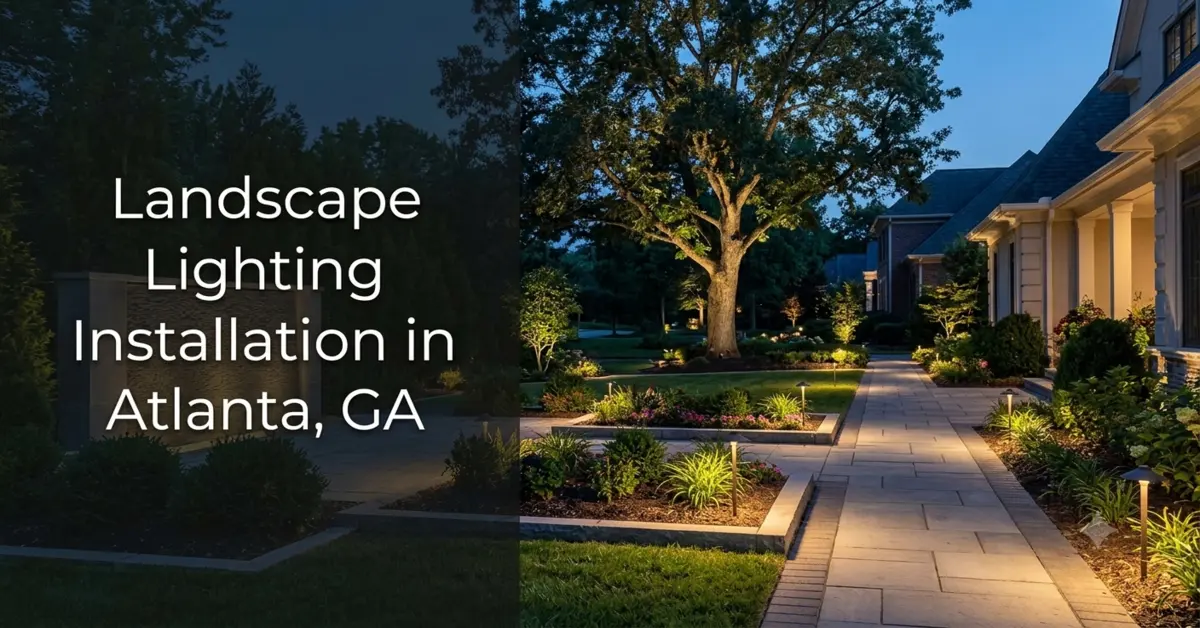
Before you buy a single fixture, before you look at anything online, go outside after dark and walk through your own yard with a flashlight. Check what kind of stuff just disappears completely when the sun is gone down, like it didn’t exist. Pay attention to which spots feel kind of awkward or uneasy to walk through at night. Then, find the specific features on your home, or in the yard, that you actually want folks to notice when they pull up after dark.
That walk is where every good landscape lighting installation starts. Not at the hardware store. Not on a product website. Out in your own yard in the dark, figuring out what actually matters and where light would make a real difference.
Most Atlanta homeowners skip that step entirely, which is exactly why so many landscape lighting systems end up looking wrong from the start. Fixtures in the wrong spots. A transformer that keeps tripping. Lights at the back of the yard that are noticeably dimmer than the ones near the house. Every one of those problems started with a decision made before installation began, not during it.
Why Do So Many Atlanta Landscape Lighting Systems Fail Early?
Atlanta has conditions that are sort of hard on outdoor electrical systems. That hot summer weather, the heavy humidity, and those frequent afternoon storms, make corrosion show up at wire connections way quicker than most homeowners assume.
Clay soil is the other Atlanta-specific challenge. The clay holds moisture differently than sandy or loose soil, which means buried connections and wire runs stay wetter for longer after rain. Roots from Atlanta’s mature tree canopy are also closer to the surface in most established neighborhoods than installers who work other markets expect. Getting into those root systems with a wire stake or a buried conduit run creates problems that don’t show up until something stops working months later.
Landscape lighting installation Atlanta work done by someone who knows these conditions builds for them from the start. Wire connections get sealed for what Atlanta weather actually does to them. Fixture locations get checked for root systems before anyone commits to a placement. Those aren’t extra steps. They’re just what the job requires here.
What Does Proper Landscape Lighting Installation Include?
This is the part that separates a system that works correctly for years from one that needs troubleshooting before the first summer is over.
Property Walk First
Every installation starts with an after-dark property assessment, not a product catalog. The installer walks the yard at dusk with the homeowner, marks where light actually makes sense based on what they see, and builds the fixture plan from that. A line buried two inches underground changes where a fixture can go. A root system that runs across the front yard changes how wire gets routed. None of that shows up until someone looks.
Transformer Sizing
The transformer powers the entire system and getting the size wrong causes more recurring problems than any other single mistake. Total fixture wattage should stay below eighty percent of the transformer’s rated capacity. That buffer keeps the transformer cool, prevents tripping, and leaves room to add fixtures later without replacing the transformer completely. A landscape lighting installer in Atlanta, who sizes a transformer exactly to the current load with no buffer, is setting up a system that works until the first time someone adds one more light to it.
Voltage Drop
Installing low voltage landscape lighting means working with twelve volts. Twelve volts drop over long wire runs and fixtures at the far end of the yard get less power than fixtures near the transformer. Lights that are noticeably dimmer at the back of the yard aren’t a fixture problem. They’re a wiring design problem that started before the first stake went into the ground. Fixing it after the wire is buried is a much bigger job than accounting for it during the planning stage.
What Are the Different Types of Landscape Lights?
Knowing what each type actually does helps with placement and helps explain why a good design uses multiple types working together rather than the same fixture everywhere.
- Path lights guide foot traffic
- Uplights accent trees dramatically
- Spotlights highlight architecture
- Step lights prevent trip hazards
- Well-lit garden features
- Floodlights cover security gaps
Installing Low-Voltage Landscape Lighting: DIY or Professional?
How to install landscape lighting in a small basic system is genuinely something a homeowner can handle on a weekend. A front walkway with six fixtures, a single transformer plugged into an existing outdoor outlet, and straightforward wire runs with no significant elevation changes. That’s a manageable DIY project with the right planning.
Landscape lighting projects that go sideways without professional involvement almost always involve one of these situations. A yard with significant slopes where voltage drop becomes a serious design challenge. A design that requires line voltage fixtures instead of low voltage ones, which is a licensed electrician’s job, regardless of skill level. A system that integrates with smart home controls or complex timer setups where getting the wiring wrong creates problems that are very difficult to troubleshoot after the fact.
Installing landscape lighting across a large Atlanta property with mature trees, clay soil, and multiple zones is a different kind of project from that front walkway. The planning alone on a complex job takes longer than the physical installation on a simple one.
What Are the Most Common Mistakes on Landscape Lighting Jobs?
These show up constantly on Atlanta properties where installation got rushed or planning got skipped.
- Transformer undersized from day one
- Wire runs too long without correction
- Connections not sealed for Atlanta humidity
- Fixtures placed too close together
- Uplights aimed straight up at base
- No buffer capacity for adding lights
- Clay soil not accounted for underground
FAQs
How do we figure out what size transformer we actually need?
Add up all your fixture wattage and pick a transformer rated at least twenty-five percent above that.
Can we add more lights to the system after everything is already installed?
Yes, as long as the transformer still has capacity left and the wire runs can handle more load.
Does Atlanta’s climate really affect landscape lighting differently than other places?
Genuinely yes. The heat, humidity, clay soil, and summer storms here corrode connections faster than most climates do.
Is this something we could install ourselves or does it need a professional?
Small basic system with a simple layout, yes. Larger property with slopes or multiple zones, call a professional.
Conclusion
A landscape lighting system that actually looks right and keeps working through Atlanta’s seasons comes from planning that happens before the first fixture goes in the ground. Landscape lighting installation done correctly means an after-dark walkthrough first, a transformer sized with room to grow, voltage drop calculated before wire gets buried, and connections sealed for what Atlanta weather actually does to outdoor electrical systems. The systems that hold up for years start with those decisions. The ones that don’t skip them.
Ready to Get Landscape Lighting Installed in Atlanta?
If your yard goes dark after sunset or a previous system keeps giving you problems, contact Local Electrician Atlanta today for landscape lighting installation near me and let’s figure out what your property actually needs after dark.